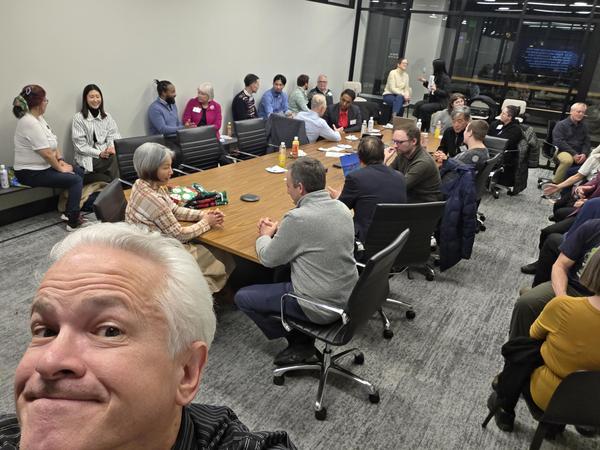
A great "Improv that Works" workshop with the Japan America Society of America on how to use the techniques of improvisation to deliver with confidence and connect with others.
Through our discussion, we realized that the foundations of
improvisation closely align with Japanese culture:
- Focus more on the team than on the self. Eastern cultures are considered collectivist, in that they focus on the well-being of the team, but not at the expense of the individual. The purpose of a team is to use its strengths to benefit each team member, but for this to occur, each team member must think about the needs of the teammates before the needs of the self. This can
be a departure from the individualist approach of most Western cultures, but it doesn't have to be. Thinking first of our teammates engages what psychologists call "pro-social behavior." The opposite of the more well-known "anti-social behavior," pro-social actions are those meant solely to benefit others. This kind of behavior has been shown to reduce stress in the "giver" as well as the receiver. Improvisation is unique in that there are no stars of the show. Stand-up comedy shines the light
on a solo performer, scripted theater has principle actors and a supporting cast. In improv, everyone shines or the whole suffers.
- Find the best in the current situation. If you have ever seen an improv show, you know that once the action starts, there is no going back. If things start to go south, the team has to work together to fix it. During after-show discussions, if an improv failed the director rarely points the
finger at the people who were onstage, but rather at those on the sidelines who did nothing to help fix the problem.
- Practice fundamental techniques every day. Eastern cultures place great focus on sticking to basic fundamentals, and practicing them everyday without expecting wild, new adventures. Improv performers always rely on basic techniques to get them through the most challenging situations, so they practice the basics
for their entire career. There is an old Zen saying, "To achieve enlightenment, chop wood and carry water. After enlightenment, chop wood and carry water." This is a simple way of saying that the skills that got you where you are, are often the very ones you need to keep climbing.
Stevie’s keynote: Own Your Space: the secret to commanding an audience, leading a team, and connecting with
others.
Stevie’s workshops: Improv that Works: how a centuries-old art form can help your organization engage employees, build teamwork, and create a culture of innovation